- 01At a Glance: Which Historic Pub Fits You
- 02Ye Olde Cheshire Cheese: Best Literary Pilgrimage
- Fleet Street
- 03Ye Olde Mitre: Best Hidden Find
- Holborn
- 04The Lamb & Flag: Best Crime Story
- Covent Garden
- 05The George Inn: Best Surviving Architecture
- Southwark
- 06The Prospect of Whitby: Best River Views
- Wapping
- 07The Grapes: Best Literary Riverside Stop
- Limehouse
- 08The Spaniards Inn: Best Beer Garden
- Hampstead
- 09The Grenadier: Most Haunted
- Belgravia
- 10The Mayflower: Best Transatlantic Story
- 11The Ten Bells: Darkest History
- Spitalfields
- 12The Trafalgar Tavern: Best Naval History and Riverside Dining
- Greenwich
- 13The Prince's Head: Best Pop-Culture Cameo
- Richmond
- 14Insider Tips
- 15Final London Insiders Tip
The best historic pubs in London are not always the ones with the most convincing signage. Half the "olde worlde" fronts on Fleet Street were rebuilt after the Great Fire of 1666, and a fair few more went up again after the Blitz. This guide picks twelve pubs with a genuine claim to history, from a Mayfair mews with tavern use recorded since 1423 to a Richmond local that only became famous last decade for an entirely different reason. Each one earns its spot for a different reason, not just age. The Museum of London's own overview of the city's surviving pubs covers several of these with the same caution about rebuilds and licence history.
At a Glance: Which Historic Pub Fits You
Twelve historic pubs in London, twelve different reasons to visit.
Ye Olde Cheshire Cheese: the strongest literary pilgrimage
Ye Olde Mitre: the best hidden find
The Lamb & Flag: the best crime story
The George Inn: the best surviving architecture
The Prospect of Whitby: the best river views
The Grapes: the best literary riverside stop
The Spaniards Inn: the best beer garden
The Grenadier: the most haunted
The Mayflower: the best transatlantic story
The Ten Bells: the darkest history
The Trafalgar Tavern: the best naval history and riverside dining
The Prince's Head: the best pop-culture cameo
Ye Olde Cheshire Cheese: Best Literary Pilgrimage
Fleet Street
Rebuilt in 1667, the year after the Great Fire, on a site with a documented tavern history stretching back to at least 1538, Ye Olde Cheshire Cheese has the densest list of famous regulars on this list. Samuel Johnson lived two doors down and is recorded as a regular; Dickens, Conan Doyle and Mark Twain all drank here too, and the pub leans into the connection with portraits and framed letters on nearly every wall. The vaulted cellar bar downstairs is the atmospheric choice over the ground-floor rooms, which can feel more like a museum gift shop than a pub at peak tourist hours. Go for the cellar and a pint of the house bitter, brewed for the pub by Samuel Smith's. It keeps standard licensing hours seven days a week, unlike several of its Fleet Street neighbours.
Nearest station: Blackfriars or Chancery Lane, both under ten minutes on foot.
Ye Olde Mitre: Best Hidden Find
Holborn
Tucked down Ely Court, an alley you would walk straight past without a tip, Ye Olde Mitre traces its licence back to 1546, built for the servants of the Bishops of Ely, whose London palace once stood on this ground. The current building dates from 1772, but the licence and the site's connection to the Bishops' land have never lapsed, which is about as strong a continuity claim as a historic pub can make. A cherry tree stump behind the bar marks, by long tradition, where Elizabeth I once danced around a maypole with Sir Christopher Hatton. It is open weekdays only and closed at weekends, so a lunchtime visit works better than a Saturday crawl. Settle into the snug at the back rather than the front bar, which fills fast with City workers after 5pm.
Nearest station: Chancery Lane, five minutes on foot.
All twelve pubs on this list, with directions, standing tips and pub-by-pub detail, are mapped out on the London Pub Map, built for exactly this kind of self-guided crawl.
The Lamb & Flag: Best Crime Story
Covent Garden
A pub has stood on this site since at least the early 18th century, with The Lamb & Flag holding continuous licensing records from 1772, though the building itself is older still. Its Victorian nickname, the Bucket of Blood, comes from the bare-knuckle boxing once staged upstairs, not from any single grim event. The poet Dryden was beaten by hired thugs in the alley outside in 1679, in a dispute widely linked to a satirical poem attributed to him. The tiny ground-floor bar gets packed by early evening, so the narrow staircase up to the first floor is the better bet after 6pm. It sits two minutes from Covent Garden station, and a few streets from the Soho scene covered in our guide to Soho at night, if the evening is only getting started.
Nearest station: Covent Garden, two minutes on foot.
The George Inn: Best Surviving Architecture
Southwark
The George Inn is the last galleried coaching inn left in London, and the only one now owned by the National Trust. The current structure dates from 1677, rebuilt after a fire on the site of a much older inn recorded as far back as the 16th century, a history the National Trust's own guide to the property sets out in more detail. Dickens drank here and mentioned it in Little Dorrit, and coaches once used the courtyard as their London terminus before the railways made them obsolete. The pub is leased to Greene King and keeps normal pub hours, so there is no weekday-only catch here. Today the galleried yard is the reason to visit: stand on the upper walkway rather than the ground floor for the best view of the timber frame, and go on a weekday afternoon if you want it to yourself.

Nearest station: London Bridge, two minutes on foot.
The Prospect of Whitby: Best River Views
Wapping
Built around 1520 on the Thames foreshore, The Prospect of Whitby claims to be the oldest riverside pub in London, though the building itself has been rebuilt more than once after fires. What survives is the site and the licensing history, plus a genuinely old flagstone floor and a pewter-topped bar rescued from a demolished pub elsewhere in the East End. Local legend places the "Hanging Judge" Judge Jeffreys on the terrace watching executions on the foreshore below, though the story postdates him by generations and cannot be verified, so take it as colour rather than record. The terrace itself, looking out over the Thames toward Canary Wharf, is the reason to visit rather than the interior, which trades heavily on nautical bric-a-brac.
Nearest station: Wapping on the Overground, seven minutes on foot.
The Grapes: Best Literary Riverside Stop
Limehouse
A narrow, three-storey pub on the Thames since around 1720, The Grapes is widely thought to have inspired the Six Jolly Fellowship Porters in Dickens's Our Mutual Friend, and Dickens himself is recorded as a visitor to the area's riverside pubs while researching the book. The pub has been part-owned since 1998 by the actor Ian McKellen, who lives nearby and still drops in. The wooden balcony at the back, barely wider than a fire escape, hangs directly over the water and is the best seat in the house on a clear evening. Inside, it is one narrow room and a staircase, so arrive early if you want a table rather than standing room.
Nearest station: Westferry on the DLR, seven minutes on foot.
The Spaniards Inn: Best Beer Garden
Hampstead
Set at the edge of Hampstead Heath, The Spaniards Inn dates from 1585 and owes part of its survival to its odd position: the road narrows sharply outside, which discouraged widening or demolition for centuries. Local legend ties the pub to the highwayman Dick Turpin as a hideout, though no surviving record confirms it, and it is best treated as good pub folklore rather than documented history. Keats, Byron and Dickens all wrote about it or drank in it, and Bram Stoker used it as a setting in Dracula. The garden, which backs onto the Heath, is the better seat in summer over the low-beamed interior, which is atmospheric but cramped once it fills up.
Nearest station: Hampstead, then a twenty-minute walk, or bus 210 direct to the door.
The Grenadier: Most Haunted
Belgravia
Built around 1720 as the officers' mess for the Duke of Wellington's regiment and opened to the public in 1818, The Grenadier hides down a cobbled mews so easy to miss that regulars half-joke it is harder to find than Ye Olde Mitre. The story attached to it is that a young officer was beaten to death here for cheating at cards, and the ceiling is now covered in banknotes left by visitors hoping to settle his debt. Take the ghost story as pub folklore rather than fact, since no record confirms the death, but the military relics and the Duke of Wellington connection to nearby Apsley House are genuine. The beef Wellington is the thing to order if you are eating rather than just drinking.
Nearest station: Hyde Park Corner, five minutes on foot.
If you're building a full day out of central London's historic pubs rather than a single stop, all twelve of these are mapped out with directions on the London Pub Map.
The Mayflower: Best Transatlantic Story
Rotherhithe
Built in 1550 and originally named the Shippe, The Mayflower takes its current name from the ship that moored nearby before carrying the Pilgrim Fathers to the New World in 1620. Captain Christopher Jones, who commanded the voyage, is buried in the graveyard of St Mary's church a short walk away. The pub was rebuilt on its original cellars in the early 18th century, reportedly using timbers salvaged from ships, and took its present name during a 1957 restoration. The decked jetty out back gives an unobstructed view of the Thames and is dog-friendly, though it floods at high tide, so mind your feet.
Nearest station: Rotherhithe on the Overground, five minutes on foot.
The Ten Bells: Darkest History
Spitalfields
Records place a pub on this corner site since the mid-18th century, with The Ten Bells moving to its current position at the junction with Fournier Street in 1851. The pub sits beside Christ Church Spitalfields and takes its name from the church's peal of bells. Its darker association is with two Jack the Ripper victims, Annie Chapman and Mary Jane Kelly, who are both recorded as having drunk here in 1888, and the original hand-painted tiling from that era is still on the walls. It is a genuinely atmospheric stop on a Whitechapel evening rather than a novelty, and our Jack the Ripper Free Walking Tour passes within a few streets of it.
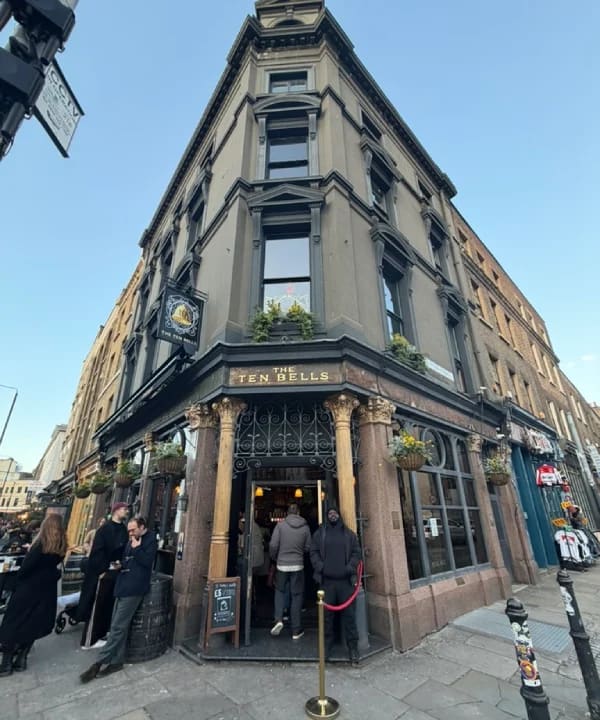
Nearest station: Liverpool Street or Shoreditch High Street, both under ten minutes on foot.
The Trafalgar Tavern: Best Naval History and Riverside Dining
Greenwich
Designed by the architect Joseph Kay and opened in 1837 on the site of an older tavern, The Trafalgar Tavern became famous for whitebait dinners attended by government ministers, a Victorian tradition Dickens referenced in Our Mutual Friend. The Grade II listed building sits at the river end of Park Row beside the Old Royal Naval College, and its cast-iron balconies were designed to imitate the stern gallery of a man-of-war. It closed in 1915 and stood empty for decades before reopening in 1965, so almost everything visible today is a careful restoration rather than an unbroken original. The dining rooms are named after Nelson's fellow admirals, and the river-facing tables are worth booking ahead for.
Nearest station: Cutty Sark for the DLR, ten minutes on foot.
The Prince's Head: Best Pop-Culture Cameo
Richmond
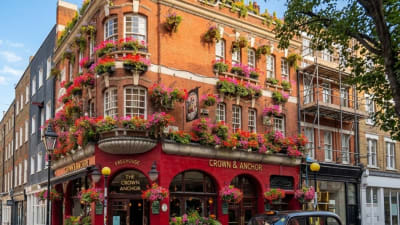
On the edge of Richmond Green since around 1740, with records suggesting a tavern on the site as early as 1705, The Prince's Head was known as the Duke's Head until it was renamed in 1778. For most of its three centuries it was simply a well-regarded local, until it became the real-life filming location for the Crown & Anchor in the television series Ted Lasso, which sent visitor numbers up sharply and added a booth of signed AFC Richmond memorabilia to the decor. It is easy to treat that as a gimmick, but the pub itself, the green it faces and the cobbled Paved Court beside it are all genuinely as old as the show's fans assume. Go for a pint on the green in summer rather than fighting for a seat inside.
Nearest station: Richmond, a five-minute walk.
Insider Tips
Fleet Street rewards a weekday visit far more than a weekend one. Ye Olde Mitre closes at weekends entirely, since its trade has always been City lawyers rather than tourists. Turn up on a Tuesday lunchtime instead and you will get the snug seats to yourself.
If you are building a full day out of these historic pubs in London rather than picking two or three stops, the twelve cluster loosely into four groups: the City and Holborn cluster (Cheshire Cheese, Ye Olde Mitre), the river cluster running east from Southwark to Rotherhithe (George Inn, Prospect of Whitby, The Grapes, The Mayflower), the West End and St James's pair (Lamb & Flag, Golden Lion), and the outliers worth a special trip (Spaniards Inn, The Grenadier, The Trafalgar Tavern, The Prince's Head). For a gentler, guide-led introduction to the city before striking out on a self-planned crawl, our Free Walking Tours in London are a good starting point.
Final London Insiders Tip
None of these historic pubs in London need dressing up. The ones with the strongest claim to real history are also, almost without exception, the ones that have changed the least: low doorways, uneven floors, and a landlord who has heard every joke about the low beams. Go for a single pint at two or three of them rather than rushing all twelve in one day, and let the history do the work instead of a phone screen.
If you want the full route planned out, with directions, opening quirks and the standing tips from this guide baked in, the London Pub Map covers all twelve stops and more for a one-off £3.95.