- 01Westminster Abbey Opening Times and Tickets
- Opening Times
- Tickets
- 02What to See Inside Westminster Abbey
- The Coronation Chair
- Poets' Corner
- Scientists' Corner
- The Lady Chapel (Henry VII Chapel)
- The Tomb of the Unknown Warrior
- 03The History of Westminster Abbey
- 04How Do You Get to Westminster Abbey?
- 05Best Time to Visit Westminster Abbey
- 06What to Do Around Westminster London
- 07Insider Tips
- 08Final London Insiders Tip
Visiting Westminster Abbey means budgeting around £30 for standard adult admission, arriving with a timed ticket booked in advance, and setting aside two to three hours to see the Coronation Chair, Poets' Corner, the Lady Chapel and the Tomb of the Unknown Warrior. The Abbey is open Monday to Saturday and closed to sightseeing on Sundays, when it operates as a working church for worship only. It sits in Westminster Abbey, a two-minute walk from the Houses of Parliament.
That single fact, that this is a working church first and a paid attraction second, explains most of what confuses first-time visitors: why the schedule shifts around state services, why photography is restricted in some chapels, and why Sunday sightseeing simply is not possible. Everything below covers what you need before you go.
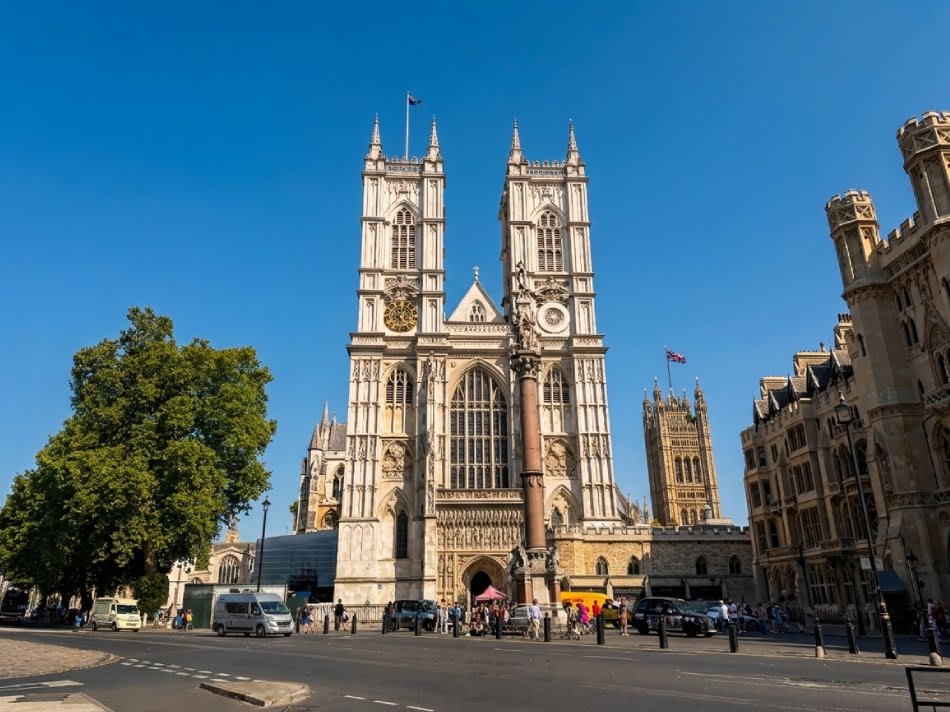
Westminster Abbey Opening Times and Tickets
Entry is by timed ticket, and the schedule shifts around state services, so treat everything below as a guide and confirm the exact date on the official site before you travel.
Opening Times
Monday to Friday: 9.30am to 3.30pm.
Saturday: 9am to 3pm.
Sunday: closed to sightseeing, open for worship only.
Last entry: roughly one hour before advertised closing.
Evensong: free to attend most weekdays, but no sightseeing route during the service.
Note: hours can shift at short notice around state services.
Tickets
Standard adult admission: around £30 when booked online in advance.
Reduced rates: available for children, students and concessions.
Under-6s: free entry.
Verger-led tour: costs more, but reaches the Shrine of Edward the Confessor behind the High Altar, which is roped off on a standard ticket.
Booking: online booking guarantees your entry slot; walk-up availability on a busy day is not reliable.
Prices: move throughout the year, including a temporary reduction during the government's 2026 summer VAT campaign, so confirm the current figure when you book.
Whether you're visiting Westminster Abbey for the first time or coming back for the verger tour, book online rather than risking a walk-up queue. Once you're through the door, Westminster Free Walking Tour passes directly by the Abbey on its route from Trafalgar Square to Buckingham Palace, so it is worth timing your Abbey visit either side of the walk rather than treating them as two separate trips into Westminster.
What to See Inside Westminster Abbey
A standard ticket covers the Nave, the royal chapels, the Cloisters, Poets' Corner, Scientists' Corner and the Queen's Diamond Jubilee Galleries. Most visitors spend their two to three hours moving between five highlights:
The Coronation Chair
Poets' Corner
Scientists' Corner
The Lady Chapel (Henry VII Chapel)
The Tomb of the Unknown Warrior.
The route through the Abbey is largely one-directional, so decide before you start whether you want to linger at the Lady Chapel or Poets' Corner, since backtracking against the flow of other visitors is genuinely difficult on a busy day. The Queen's Diamond Jubilee Galleries, reached by a narrow spiral staircase in the medieval triforium, are worth the climb if your legs can manage it, and they hold items rarely displayed elsewhere in the building.
The Coronation Chair
Edward I commissioned this oak chair in 1300 to hold the Stone of Scone, brought south from Scotland in 1296. Every coronation since 1308 has used it, with the exception of Edward V and Edward VIII, neither of whom was crowned. Look closely at the back of the chair and you'll find genuine 18th and 19th-century graffiti, carved by Westminster schoolboys and visitors, including one tourist's confession that he slept in it overnight in 1800. The Stone itself now lives at Perth Museum in Scotland and only returns to London for an actual coronation.
Poets' Corner
Geoffrey Chaucer was buried here in 1400, not for his poetry but because he had worked as Clerk of Works at the Abbey. The literary association grew up around his grave over the following two centuries, and Poets' Corner now holds a mix of actual burials and memorials: Charles Dickens is buried here against his own wishes for a quiet Kent funeral, while Shakespeare has only a memorial, since he is buried in Stratford-upon-Avon. Thomas Hardy's ashes rest here too, while his heart was buried separately in Dorset.
Scientists' Corner
Isaac Newton's tomb sits close to the choir screen, marked by a grand monument completed in 1731. Charles Darwin is buried a short distance away. In 2018, a memorial stone for Stephen Hawking was placed between the two, inscribed with the entropy formula for a black hole rather than any epitaph, a fitting note for a scientist buried among the men whose work he built on.
The Lady Chapel (Henry VII Chapel)
Henry VII commissioned this chapel in 1503, and it took nine years to build. The fan-vaulted stone ceiling is considered one of the finest examples of English medieval architecture anywhere, and it is usually the single space visitors photograph most. Banners belonging to Knights of the Order of the Bath hang above the choir stalls, and Henry VII himself is buried here beside his wife, Elizabeth of York, beneath an elaborate bronze tomb.
The Tomb of the Unknown Warrior
Buried on 11 November 1920 in soil brought from French battlefields, this is the one grave in the Abbey that nobody is permitted to walk across, a convention that has held for over a century, including during royal wedding processions. It sits just inside the West Entrance, so you will pass it within your first few steps.
The History of Westminster Abbey
Westminster Abbey's history spans over a thousand years, and most of it is still visible in the building today:
960: Benedictine monks found a community on this site, then a marshy stretch of the Thames known as Thorney Island.
1065: Edward the Confessor's rebuilt church is consecrated in the Romanesque style, days before his death. His shrine still stands behind the High Altar, the reason so many later monarchs chose to be buried nearby.
1066: William the Conqueror is crowned here on Christmas Day, the first of an unbroken line of coronations. Surviving accounts describe soldiers lining the approach roads and confusion breaking out among the crowd outside during the service.
1070: The Pyx Chamber, the Abbey's oldest surviving fragment, is built off the East Cloister, briefly used to store the crown jewels rather than for worship.
1100: Henry I marries Matilda of Scotland, the first of many royal weddings held at the Abbey.
1245: Henry III begins demolishing Edward the Confessor's church and rebuilding it in the French Gothic style you see today, a project that takes over two centuries to finish.
1560: Elizabeth I re-founds the Abbey as the Collegiate Church of St Peter in Westminster, making it a "royal peculiar" answerable directly to the monarch rather than to a diocese, and not, despite the name, a cathedral in the strict sense.
1997: The funeral of Diana, Princess of Wales is held at the Abbey.
2011: Prince William marries Catherine Middleton here.
2022: The state funeral of Queen Elizabeth II takes place at the Abbey.
For the wider story of how the surrounding area grew up around it, see our History of Westminster guide.
How Do You Get to Westminster Abbey?
Most people visiting Westminster Abbey combine the trip with at least one other Westminster landmark on the same day, which is worth factoring into how early you start.
By tube:
Westminster station (District, Circle, Jubilee lines): roughly 3 minutes' walk, straight across Parliament Square.
St James's Park station (District, Circle lines): 5 to 7 minutes' walk, closer to Dean's Yard and away from the densest crowds around Parliament Square and Big Ben.
By bus and car:
Buses along Victoria Street and Millbank stop within a few minutes' walk, useful if the tube is disrupted.
No dedicated visitor parking sits near the Abbey, so driving is rarely the fastest option here.
On foot, nearby:
Houses of Parliament and Elizabeth Tower (Big Ben): 2 minutes away.
Buckingham Palace a 15-minute walk up Birdcage Walk.
Westminster Bridge: crossing to the south bank gives one of the best photo angles of the Abbey's towers.
For a route that strings all of this together on foot, our Westminster Walking Route: Self-Guided Map covers the same ground at a comfortable pace, and our Best Things to See in Westminster guide covers what else earns a stop nearby.
Anyone visiting Westminster Abbey with mobility needs should check the accessibility page in advance: the building has genuinely limited step-free access in places, given its age, so allow extra time.
Best Time to Visit Westminster Abbey
Timing matters more here than at most London attractions, since the aisles around the Coronation Chair and the Lady Chapel narrow quickly and a single coach party can fill the space in minutes.
Quietest times:
Weekday mornings at opening, 9.30am: roughly 45 minutes of genuinely thin crowds before tour groups arrive in number.
Early afternoon on a weekday: the best fallback if a 9.30am start is not realistic, since school and coach groups mostly move through in the late morning.
Term time over school holidays: makes a genuine difference to how busy the nave feels.
Times to avoid:
Saturdays: the only weekend sightseeing day, so consistently the busiest.
State occasions and public holidays: the Abbey has closed to sightseeing at short notice for events like coronations and state funerals in recent years, with no reliable way to predict these more than a few weeks out.
If your trip allows any flexibility at all, visiting Westminster Abbey on a weekday morning is worth planning around, and save Saturday for somewhere with more room to spread out, such as one of the parks or markets nearby.
What to Do Around Westminster London
Houses of Parliament and Big Ben: guided tours available, best photographed from Westminster Bridge.
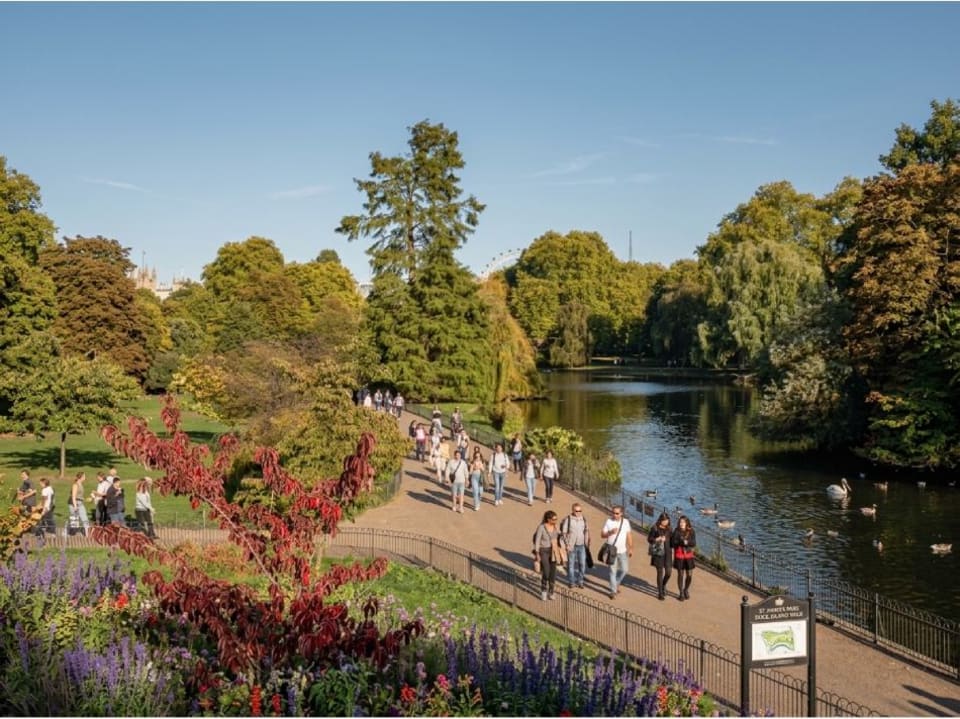
St James's Park: five minutes away, with a lake and deckchairs, good for a break between sights.
Churchill War Rooms: the underground WWII bunker near St James's Park.
Buckingham Palace and the Changing of the Guard: a 15-minute walk up Birdcage Walk.
Trafalgar Square and the National Gallery: a short walk north across Parliament Square.
Insider Tips
Cross to the south side of Westminster Bridge before you go in. It is the angle almost nobody photographs, and it gives you the Abbey's towers and Big Ben in the same frame without a crowd of phones in your shot. It's a habit worth adopting whenever you're visiting Westminster Abbey and have ten spare minutes either side of your ticketed slot.
If you only upgrade one thing, make it the verger-led tour rather than the audio guide. The Shrine of Edward the Confessor, which is roped off on a standard ticket, is worth the extra cost on its own.
Final London Insiders Tip
Westminster Abbey rewards slowing down more than almost anywhere else in this part of London, and two to three hours is genuinely the minimum, not the maximum. Anyone visiting Westminster Abbey and building a full day around it should take a look at our Westminster Itinerary: 1 Perfect Day for how the rest of the neighbourhood fits together. Then pair the Abbey with the Westminster Free Walking Tour, which covers the ground between here and Buckingham Palace on foot, with your guide filling in the context an audio guide inside the Abbey cannot: how the Coronation route actually works, what's changed around Parliament Square in the last decade, and where the crowds haven't caught up yet. It's genuinely free, tip-based at the end, and it's the natural second half of a Westminster morning that starts inside the Abbey.