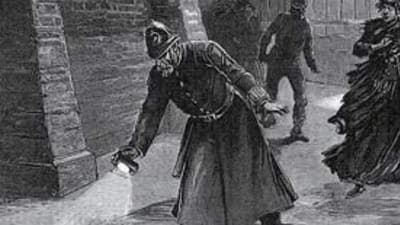
More than 200 letters claiming to be from the Whitechapel murderer landed on desks across London in the autumn of 1888. The Jack the Ripper letters are the reason the killer has a name at all: before the first one arrived, newspapers were still calling him "Leather Apron." Three matter more than the rest. The "Dear Boss" letter gave him the name that stuck. The "Saucy Jacky" postcard taunted police the morning after a double murder. The "From Hell" letter arrived with half a human kidney. Almost none of these letters are now believed genuine, but a handful still divide historians, and the originals survive in London today.
The Dear Boss Letter: The Message That Named Him
The letter that started it all arrived at the Central News Agency's office on New Bridge Street on 27 September 1888, dated two days earlier and written in red ink. It opened "Dear Boss" and closed with a signature nobody had used before: Jack the Ripper. Staff at the agency treated it as a joke and sat on it for two days before forwarding it to Scotland Yard on 29 September, with a covering note from a Central News journalist named Thomas Bulling.
The timing is what changed everything. The night after the letter reached the police, two women, Elizabeth Stride and Catherine Eddowes, were murdered within an hour of each other in what the press dubbed the "double event." The letter had promised the next victim would have her ears clipped. Eddowes was found with part of one ear severed. That single detail is why a letter most historians now doubt was ever taken seriously at the time, and why the name Jack the Ripper eclipsed every earlier nickname within days.
The original still exists. It vanished from police files by 1928, resurfaced briefly in a private collection in 1950, disappeared again, then arrived anonymously at Scotland Yard in a brown envelope posted from Croydon in November 1987. It now sits in the National Archives at Kew alongside more than 200 other letters signed in the killer's name.
I've stood at the National Archives reading room table where staff bring out the facsimile box for MEPO 3/142, and the red ink on Dear Boss has faded to a rust-brown that's easy to miss unless you tilt the page under the reading light. The handwriting slants right, looping large on the capital letters, nothing like the careful copperplate a Victorian clerk would use. Researchers who've handled the original describe the paper as cheap, the kind sold by the ream to anyone rather than a specific stationer, which is one more reason it's so hard to trace back to a single desk in 1888.
The Saucy Jacky Postcard
Four days after Dear Boss reached the police, a second message arrived at the same Central News Agency office. Postmarked 1 October, written in the same red ink and in a hand that closely matched the first letter, the postcard bragged about the double murder before most newspapers had finished reporting it: "you'll hear about Saucy Jacky's work tomorrow, double event this time." Whoever wrote it knew details that hadn't yet reached the press, which is exactly why the postcard still gets taken more seriously than most of the pile.
In the late 2010s, University of Manchester forensic linguist Dr Andrea Nini ran a cluster analysis across 209 surviving Ripper letters, comparing sentence structures and word choices. Dear Boss and Saucy Jacky came back as a clear match, almost certainly written by the same hand, and Nini's analysis pointed toward someone with a background in journalism rather than the killer himself. That theory isn't new. Robert Anderson, head of CID during the investigation, wrote in his 1910 memoirs that he knew which journalist had penned it, though he never named him publicly.
Nini's method didn't rely on handwriting at all, which is why it carries more weight than the amateur graphology that circulated for a century beforehand. He tracked function words, the "the", "and", "of" scaffolding that most writers never consciously control, alongside sentence length and punctuation habits across all 209 letters in the police file. Dear Boss and Saucy Jacky scored closer to each other than to any other pair in the set, a statistical fingerprint rather than a visual impression of similar handwriting.
The From Hell Letter
On 16 October 1888, George Lusk, the chairman of the Whitechapel Vigilance Committee, opened a small parcel at his home in Mile End. Inside was half a human kidney preserved in wine and a letter, misspelled and barely literate, that read in part: it had been taken from a victim, fried, and eaten. It was signed "from hell," and it is the one letter in the entire archive that a meaningful number of Ripper historians still think might be genuine.
Unlike Dear Boss or Saucy Jacky, this letter never went to a newspaper or the police. It went straight to a private citizen at his home address, which only a small number of people could reasonably have known. Dr Thomas Openshaw, curator of the pathology museum at the London Hospital, examined the kidney and found it consistent with organs from a woman around 45, the same profile as victim Catherine Eddowes, though his findings stopped short of proof. The forensic connection between the kidney and Openshaw's work is still on display less than a mile from where Lusk received the parcel, at the Royal London Hospital Museum, in the crypt of the old hospital church. Eddowes herself is one of the five women whose lives are covered in more depth on our page about Jack the Ripper Victims.
Walking that ground yourself puts the letters in context in a way no photograph can. Our guides cover the Whitechapel Vigilance Committee and the murder sites together on the Jack the Ripper Free Walking Tour.
Were the Letters Real, or Press Hoaxes?
The honest answer is that almost all of them were hoaxes, and the people investigating the case at the time knew it. By late October 1888, the Illustrated Police News reported that police had already logged and dismissed hundreds of letters, most from bored Londoners, amateur detectives, and journalists chasing a story that refused to slow down. Handwriting varied wildly between letters. Postmarks came from all over the country. Several writers later confessed, or were caught, once police started publishing facsimiles and comparing samples.
What keeps the Dear Boss and Saucy Jacky pair interesting isn't that they're likely genuine confessions. It's that Nini's linguistic analysis suggests a single author behind both, and that author's chosen outlet, a press agency rather than a newspaper or the police, points toward someone who understood how Victorian Fleet Street worked from the inside. Whether that person had any connection to the actual killer, or was simply a journalist manufacturing a better headline, remains one of the case's open questions. The wider social conditions that made Whitechapel fertile ground for this kind of media panic are covered by the Museum of London's own account of the case. It sits alongside the wider debate over who the killer actually was, covered in full on our page on Who Was Jack the Ripper.
How Many Jack the Ripper Letters Were There?
The Metropolitan Police file on the case, catalogued as MEPO 3/142 at the National Archives, holds more than 200 letters signed in the killer's name, and that's only the ones that survived. Contemporary press reports from October 1888 put the true number of letters received by police at several hundred, the overwhelming majority dismissed within days. A few stand out for reasons beyond Dear Boss, Saucy Jacky and From Hell: a letter to Dr Openshaw himself, taunting him directly, and a threatening note sent to a witness who had come forward, warning him that his address was known.
None of this uncertainty has stopped the letters from shaping how the case is told. The name "Jack the Ripper" exists because of a letter almost nobody now believes he wrote. For the fuller chronology of how the murders, the letters and the investigation overlapped that autumn, see our Jack the Ripper Timeline.
Insider Tips
The Royal London Hospital Museum is free to enter and rarely crowded, which makes it one of the few places in London where you can see genuine forensic material connected to the case without booking a ticket months ahead. Check opening days before you go, since the museum keeps limited hours across the week.
The original Dear Boss letter and the rest of the MEPO 3/142 file live at the National Archives in Kew, not in Whitechapel itself. If you want to see facsimiles closer to where the murders happened, reproductions are on display at the Jack the Ripper Museum, a short walk from several of the sites covered on our page of Jack the Ripper Murder Sites.
Final London Insiders Tip
Reading about the Jack the Ripper letters is one thing. Standing on the streets where the Central News Agency received them, where Lusk opened his parcel, and where the murders that provoked them took place is another. Our guides walk the real ground, not a script lifted from a documentary, and they'll show you exactly where each letter fits into the timeline of that autumn. Join the Jack the Ripper Free Walking Tour to see it for yourself, on foot, with someone who knows the case cold.