- 011. Buckingham Palace and the Changing of the Guard
- 022. Westminster Abbey
- 033. Big Ben and the Houses of Parliament
- 044. Churchill War Rooms
- 055. The Tower of London and Tower Bridge
- 066. Trafalgar Square and the National Gallery
- 077. Covent Garden
- 088. The British Museum
- 099. Soho
- 1010. Borough Market
- 1111. Tate Modern
- 12Beyond the Centre: Three More If You're Staying Longer
- Natural History Museum
- Victoria and Albert Museum
- Greenwich Park and the Royal Observatory
- 13Insider Tips
- 14Final London Insiders Tip
Eleven stops account for most of what a first-time visitor genuinely needs from London, and the first nine of them sit along a walkable route through Westminster and the West End. If you are working out what to see and do in London on a first trip, the honest answer is not a forty-item bucket list fighting for your remaining hours. It is a shorter list, walked in a sensible order, with enough interior visits to make the day about more than photographs of railings. The core nine are Buckingham Palace and the Changing of the Guard, Westminster Abbey, Big Ben and the Houses of Parliament, the Churchill War Rooms, the Tower of London and Tower Bridge, Trafalgar Square and the National Gallery, Covent Garden, the British Museum, and Soho. Two more, Borough Market and Tate Modern, extend that route across the river. Three further stops for a longer trip come after. Each entry covers what it costs, when to go, and the detail a rushed itinerary usually misses.
1. Buckingham Palace and the Changing of the Guard
Buckingham Palace has been the monarch's working London residence since 1837, and the Changing of the Guard outside it is the one ceremony every first-time visitor plans around without quite knowing the schedule. The ceremony is free to watch and runs on select days at 11am, and your guide will tell you plainly that it can be cancelled at short notice for weather or state events, so build in a backup for that hour rather than anchoring your whole morning to it. Most visitors watch from the railings directly in front of the Palace, but the view from the Victoria Memorial steps is wider and lets you see the bands arrive from Wellington Barracks. The State Rooms themselves only open to the public for a ten-week summer window, typically July to September, when you can walk through 19 rooms including the Throne Room and the Grand Staircase. Outside that window, the exterior and the ceremony are the visit, and that is still worth the morning.
The detail most guides skip: book a State Rooms slot after 12.30pm if you also want to watch the Changing of the Guard, since the two overlap and the ceremony cannot be seen from inside the grounds. For the full breakdown of where to stand and which days the ceremony runs, see our guide to the changing of the guard best viewing spots and times. If you would rather have a local walk you through Buckingham Palace and three more Westminster landmarks in one morning, that is exactly the route our free walking tour follows, and the Westminster edition ends at the Palace gates in time for the ceremony.
2. Westminster Abbey
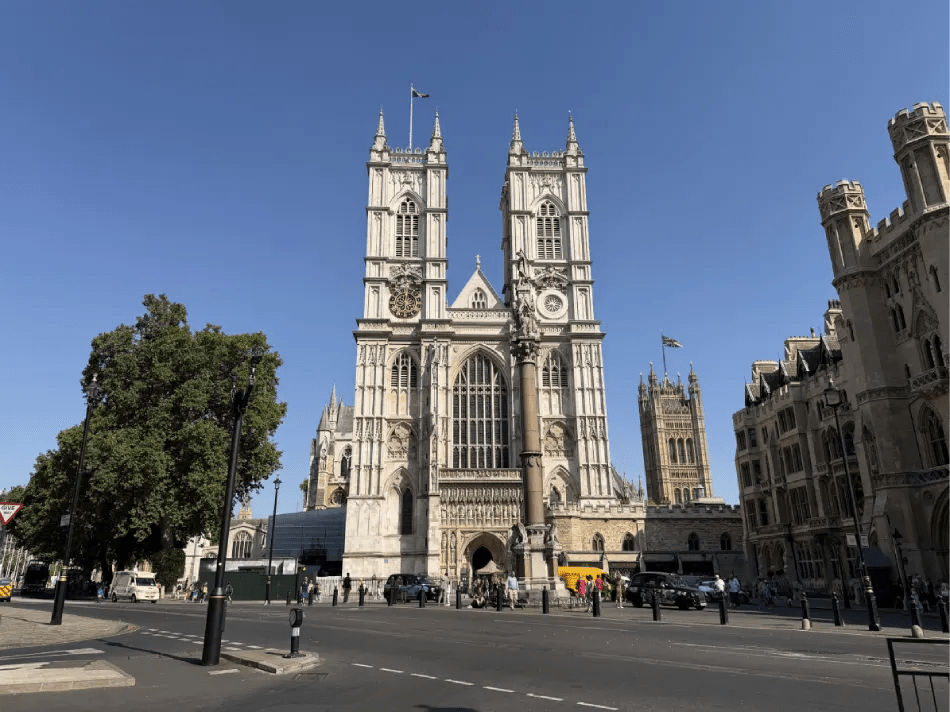
Westminster Abbey has hosted every coronation since 1066, and it is still an active church rather than a museum, which is why it closes to sightseers on Sundays. Adult entry runs around £27 to £31 depending on how far ahead you book, and includes an audio guide covering the Nave, Poets' Corner, the royal chapels and the cloisters. Plan on 60 to 90 minutes minimum, longer if you stop at every named grave, and note that the building shuts earlier than most visitors expect: 3.30pm on most weekdays, 4.30pm on Wednesdays when it stays open latest.
Poets' Corner gets the crowds, but Scientists' Corner nearby, where Isaac Newton and Charles Darwin are buried within a few steps of each other, is where most first-time visitors linger longest once they find it. According to the Abbey's own visitor information, the building has served as the setting for royal weddings and state funerals as recently as the past decade, which is part of why photography is restricted in some chapels on any given day. Arrive at opening if you want the Nave without a queue forming behind you at the security check.
3. Big Ben and the Houses of Parliament
Houses of Parliament and its clock tower, properly the Elizabeth Tower, have marked Westminster's skyline since the 1850s rebuild after the old Palace of Westminster burned down in 1834. You cannot walk inside on a casual visit unless you book a specific guided tour or a UK resident writes to their MP for a Public Gallery pass, so for most first-timers this stop is external: Parliament Square, the riverside path along the Thames, and the view back across Westminster Bridge at dusk when the clock face is lit. Big Ben itself refers only to the largest bell inside the tower, not the tower or the clock, a distinction that trips up almost every visitor who repeats it back the wrong way in photos captioned for home.
The best photograph angle is not from Westminster Bridge, where everyone stands, but from the far side of Parliament Square near the Supreme Court, which clears the lamp posts out of the frame. For the full story of how the building came to look the way it does, our guide to the houses of Parliament covers the fire, the rebuild, and the clock mechanism itself. If Westminster's history is what draws you, our one-day Westminster itinerary strings this stop together with the Abbey and the Palace into a single, unrushed route.
4. Churchill War Rooms
Churchill War Rooms is the underground bunker where Winston Churchill's war cabinet actually worked between 1939 and 1945, left largely as it was on the day the lights were switched off. Tickets run around £33 to £34 for adults, the site opens daily at 9.30am (9am on Fridays and Saturdays), and last entry is an hour before closing at 6pm. Budget a genuine two hours: roughly 45 minutes for the Cabinet War Rooms themselves and another 45 for the Churchill Museum attached to it, more if you use the included audio guide properly rather than skimming it.
This is the stop most first-timers skip in favour of a fourth palace or park, and it is the one repeat visitors tell you not to miss. The Map Room, staffed around the clock for six years straight, still has the wall where officials tracked convoy positions with coloured wool, and the narrowest corridor in the whole complex is 68cm wide, a detail that makes the working conditions land in a way no description on a placard quite manages. Book the first slot of the day if you can; by midday the corridors narrow the queue as much as the walls do.
5. The Tower of London and Tower Bridge
Tower of London has spent nine centuries as a royal palace, a prison, a mint, and now a museum, and the Crown Jewels inside the Jewel House are the reason most visitors queue for it first. Adult admission is around £34 to £37, the Tower opens at 9am Tuesday to Saturday and 10am on Sunday and Monday, and the free Yeoman Warder tour, included with your ticket, departs roughly every 30 minutes and is worth timing your visit around rather than treating as optional. According to Historic Royal Palaces, the site's own operator, a full visit covering the Crown Jewels, the White Tower armoury, the Medieval Palace and the Wall Walk realistically takes three to four hours.
Most visitors walk straight past the Chapel of St John the Evangelist on the White Tower's upper floor, one of the best-preserved Norman interiors in England, because it is not signposted as heavily as the armoury below it. Tower Bridge is a five-minute walk from the Tower's main exit and makes a natural second stop, particularly if you want the glass-floor walkway view of the Thames from 42 metres up. Pair the two and you have covered the whole eastern end of a first-timer's London in a single afternoon.
Want the Westminster half of this route walked and narrated rather than worked out from a map and a ticket app? That is the ground our Westminster Free Walking Tour covers, tip-based and free to join.
6. Trafalgar Square and the National Gallery
Trafalgar Square was laid out in the 1840s to commemorate Nelson's victory, and the square still works as the geographic hinge of central London, five minutes from Westminster on foot and five minutes from Covent Garden the other way. Nelson's Column stands 52 metres tall, the four bronze lions at its base were added later than most visitors assume, in 1867, and the fourth plinth on the square's northwest corner has hosted a rotating contemporary art commission since 1999 rather than the historical statue you might expect to find there.
The National Gallery on the square's north side is free to enter, which makes it one of the better uses of a rainy hour anywhere in this list. It holds over 2,300 paintings spanning the mid-13th century to 1900, including work by Van Gogh, Turner and Vermeer, and Room 43 is the fastest route to the Impressionist highlights if your time is short. If you are still working out what to see and do in London beyond the paid attractions, this is the free stop that rewards the most time per pound spent, which in this case is none at all.
7. Covent Garden
Covent Garden Piazza began as London's main fruit and vegetable market in the 17th century and kept that job until 1974, when the market moved south and the piazza itself was restored into the mix of shops, street performers and covered arcades it is today. The Apple Market inside the piazza still runs stalls daily, street performers audition for fixed slots under the portico rather than turning up freely, which is why the quality stays consistently high, and the London Transport Museum sits on the piazza's east side if you want a genuinely different kind of stop from the palaces and churches earlier in the day.
London Insiders Tip: come back after 6pm once the day-trip crowds thin out. The piazza performers keep going into the evening, the restaurants around the edges get better tables available, and the whole square photographs differently under the string lighting than it does at midday.
8. The British Museum
British Museum opened in 1759 and was Britain's first national public museum, built initially around the private collection of physician Hans Sloane. Entry is free, the Great Court under its glass roof is the largest covered public square in Europe, and the collection runs to eight million objects, which means no first-time visit can attempt more than a fraction of it. The Rosetta Stone, the Parthenon sculptures and the Egyptian mummy galleries pull the largest crowds, so if your time is limited, picking two of the three and giving them proper attention beats a rushed lap of all three.
According to the Museum's own visitor guidance, allowing at least two to three hours is realistic even for a highlights-only visit, and the museum stays open until 5pm most days with a late opening on Fridays. If what to see and do in London for you leans toward ancient history rather than royal London, this is the stop worth protecting the most time for.
9. Soho
Carnaby Street and the streets around it were farmland until the 17th century, then a magnet for immigrant communities and the creative industries that gave Soho its reputation, and today the neighbourhood works as the natural place to end a first day in London once the daytime sights close. Restaurants here cover everything from Chinatown's dim sum to some of the city's oldest Italian delis, and the streets stay genuinely busy well past the hours when Westminster empties out. Our full neighbourhood guide covers where to eat, where to drink and how the area's history shaped its current layout.
If a first day in Westminster leaves you wanting a second neighbourhood to explore on foot with someone who knows it, that is what our Soho tour is built for, and it runs on a genuinely tip-based, no-cost basis the same way the Westminster edition does.
10. Borough Market
Borough Market is a five-minute walk south from the Tower Bridge area across the river, and it turns the eastern half of your route into a food stop rather than another ticket queue. There has been a market on or near this site for around a thousand years, and the current one trades under the railway viaducts beside Southwark Cathedral. The single most important thing to know before you plan around it: the full market is closed every Monday. It runs Tuesday to Friday from 10am to 5pm and Saturday from 9am to 5pm, while Sundays bring only the surrounding restaurants and a handful of traders rather than the full run of stalls. Turn up on a Monday expecting the hot-food stalls and you will find shutters.
Go hungry and skip breakfast, because the point here is grazing rather than a sit-down meal: salt beef bagels, raclette scraped over potatoes, whole-hog rolls, and coffee from traders who have held their pitches for years. Tuesday and Wednesday mornings are the quietest windows by a wide margin, and Saturday afternoon is the single busiest time in the week, when moving through the central aisles becomes a slow shuffle. Arrive before noon on a weekday and you can actually see what you are buying instead of the back of someone's coat.
11. Tate Modern
Tate Modern sits a short riverside walk west from Borough Market, which makes the two a natural south-bank pairing to close out the eastern day. It occupies the former Bankside Power Station, and entry to the permanent collection is free, with only the temporary headline exhibitions charging for a ticket. The collection holds Rothko, Picasso, Warhol and Dalí, and the building itself, all turbine hall and repurposed industrial concrete, is as much the draw as the art hanging inside it. It opens 10am to 6pm Sunday to Thursday and stays open until 9pm on Friday and Saturday, when the crowds fall away sharply after 6pm.
Here is the detail that saves you a queue: enter through the Blavatnik Building on Park Street rather than the main Turbine Hall entrance on Bankside. The Turbine Hall door draws 40 to 60 minute queues on weekend mornings, while the Park Street entrance five minutes along the riverside almost never has one, and both lead to the same galleries. Free 45-minute tours of the permanent collection depart several times a day from the information desk, no booking, which is the single best way to make sense of a modern-art collection if that is not usually your territory.
Beyond the Centre: Three More If You're Staying Longer
The eleven stops above connect on foot or with one short river crossing. The next three do not. Each sits a genuine tube, train or DLR ride away from the central cluster, so treat them as a third day or a dedicated half-day rather than something you fold into the walking route. They earn their place for a longer trip, and two of the three are free.
Natural History Museum
Natural History Museum in South Kensington is free to enter, opens daily from 10am to 5.50pm with last entry at 5.30pm, and is the easiest of the three to reach: a five-minute walk from South Kensington tube through a dedicated pedestrian tunnel. The animatronic dinosaur gallery and the blue whale skeleton suspended in Hintze Hall are the headline draws, and the building itself, an 1881 Romanesque cathedral of a museum, is worth the trip on its own. Book a free timed slot online for weekends and school holidays, when walk-up entry can mean a 30 to 45 minute queue. Head straight for the Dinosaur Gallery first thing, because it develops its own internal queue by mid-morning that the rest of the museum does not.
Victoria and Albert Museum
Victoria and Albert Museum is a four-minute walk from the Natural History Museum, which makes pairing the two the obvious use of a South Kensington morning. Entry to the permanent collection is free, it opens daily from 10am to 5.45pm with a late Friday opening until 10pm, and it holds the world's largest collection of decorative arts and design across 145 galleries. One honest caveat worth knowing before you go: the Fashion Gallery, one of the V&A's most popular rooms, is closed for redevelopment until autumn 2028, so if fashion is the reason you are going, adjust your expectations. The Cast Courts, two Victorian halls holding a full-scale plaster cast of Michelangelo's David and a two-part reproduction of Trajan's Column, are the room most visitors walk past and the one worth finding.
Greenwich Park and the Royal Observatory
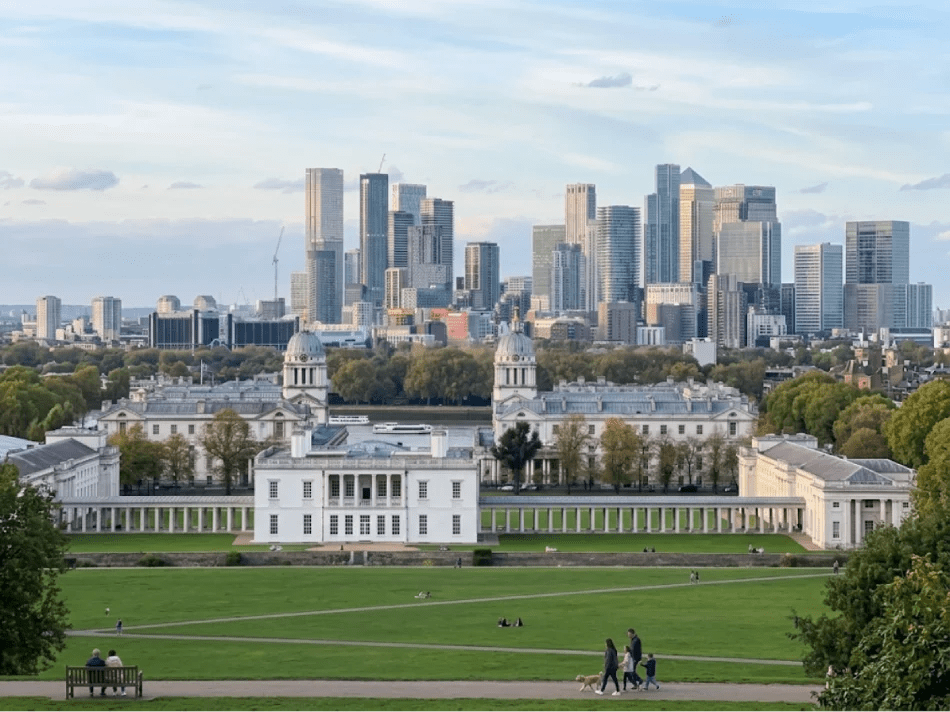
Royal Observatory Greenwich sits at the top of Greenwich Park, reachable by DLR to Cutty Sark or a train to Greenwich or Maze Hill, roughly a 15-minute walk from either station up through the park. Greenwich Park itself is free and open year-round, and the view back across the Old Royal Naval College to Canary Wharf from the hill is the best free panorama in the city. The Observatory, where you can stand astride the Prime Meridian line with a foot in each hemisphere, charges around £18 to £20 for adults and opens daily 10am to 5pm with last entry at 4.15pm. One firm caveat before you build a day around it: the Royal Observatory closes to the public on 1 November 2026 for a major renovation, with reopening planned for spring 2027. During that closure the park, the view and the surrounding Maritime Greenwich sights stay open, but the Meridian line itself does not.
Insider Tips
London Insiders Tip: buy timed tickets for the Tower of London, Westminster Abbey and the Churchill War Rooms online at least a few days ahead. All three sell out specific morning slots in peak season, and walk-up prices are consistently higher than the advance rate at all three sites.
London Insiders Tip: if guaranteeing a good Changing of the Guard view matters more to you than winging it, our self-guided Changing of the Guard experience maps out exact standing positions and timing for the ceremony, which is worth the price of a coffee if the ceremony is the one thing on this list you cannot afford to miss.
Final London Insiders Tip
Do the first nine in roughly the order listed and you will have walked, rather than bussed, almost the entire route: Buckingham Palace into Westminster Abbey and Parliament, down to the Churchill War Rooms, across to the Tower and Tower Bridge, then Borough Market and Tate Modern across the river to close the eastern day. Trafalgar Square, Covent Garden, the British Museum and Soho fill a second day on foot. The three South Kensington and Greenwich stops are a third day for anyone staying longer, reached by tube or DLR rather than on foot. That gives you two full but unrushed walking days rather than one exhausting one, and it leaves you with a genuine sense of how the city fits together rather than a phone full of landmarks with no connective tissue between them. If you want that connective tissue explained in person rather than worked out from a map, our Westminster Free Walking Tour covers the first half of this route with your guide filling in the parts a ticket machine never will.